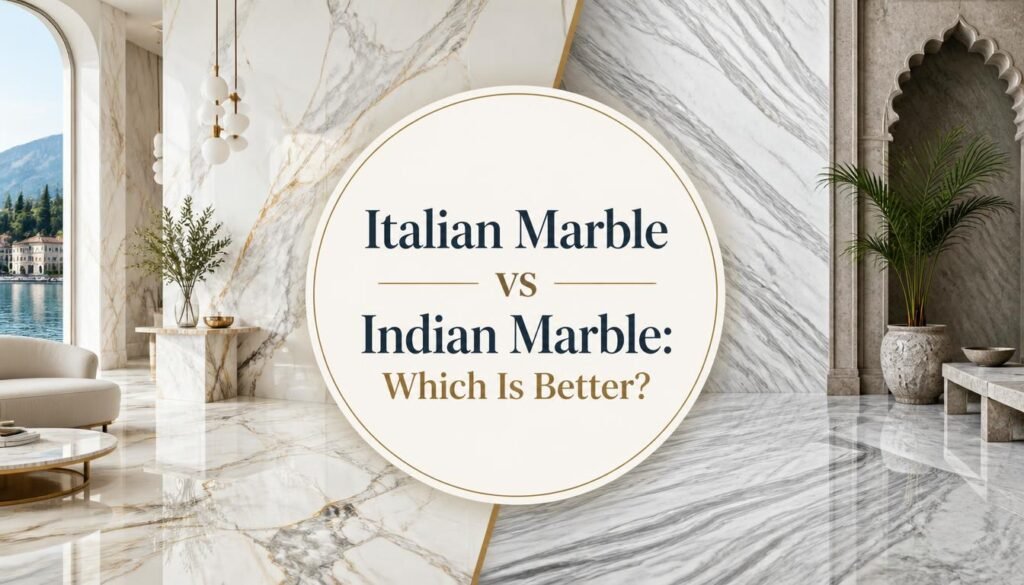
Italian Marble vs Indian Marble: Which Is Better?
Italian marble has long carried a reputation for prestige, while Indian marble has built its own strong global standing for quality, variety, and value. For buyers weighing the two, the decision often comes down to more than just origin — price, availability, and specific use case all matter. Here’s an honest comparison.
The Reputation Factor
Italian marble, particularly varieties like Carrara and Calacatta, has centuries of association with fine art and architecture, giving it strong brand recognition among buyers and designers. Indian marble, quarried extensively in Rajasthan, has built its reputation more recently but has become one of the largest and most reliable sources of marble globally, both for domestic use and export.
Quality Comparison
Both countries produce high-quality marble, but quality within each origin varies significantly by specific quarry and grade. High-grade Indian marble, such as premium Makrana varieties, is comparable in density and finish quality to many mid-to-premium Italian options, while Italy’s most famous varieties (like Calacatta) remain in a category of their own for buyers specifically seeking that heritage and look.
Price Comparison
This is often the most significant factor for buyers. Indian marble is generally more affordable than Italian marble, sometimes substantially so, due to differences in quarrying scale, labor costs, and transportation distances depending on your location. For large projects or budget-conscious buyers, Indian marble often delivers strong value without a dramatic compromise in visual appeal.
Variety and Availability
India offers an especially wide range of marble colors and patterns — from classic whites to greens, blacks, and beige tones — supported by large-scale quarrying operations. Italy is more renowned for specific, iconic varieties, but the overall breadth of options and consistent availability can be more limited compared to India’s expansive supply.
Veining and Appearance
Italian marble, especially Calacatta and Statuario varieties, is often associated with dramatic, high-contrast veining that has become a design benchmark. Indian marble offers its own distinct veining patterns, and several Indian varieties are specifically marketed as more accessible alternatives to these iconic Italian looks, offering a similar aesthetic at a different price point.
Which Should You Choose?
- Choose Italian marble if you specifically want a heritage variety like Carrara or Calacatta for a project where that provenance matters to the design brief or client expectations
- Choose Indian marble if you want strong quality, wide color variety, and better overall value, particularly for large-scale projects or budget-conscious buyers
Sourcing Quality Indian Marble
For buyers who’ve decided Indian marble fits their project, working with an established, quality-focused exporter is essential to getting consistent results. Patel Timber Corporation exports a wide range of Indian marble varieties to international buyers, with quality inspection built into the export process.
Understanding the Import Process
Regardless of origin, importing marble involves specific documentation and compliance steps that vary by destination country. Go4Export India (go4exportindia.com) provides consultation on import and export processes from India, helping international buyers navigate this stage with confidence.

- Visual appearance
- Slip resistance
- Genuine Quality
- Price
Final Thoughts
Both Italian and Indian marble have their place, and the “better” choice really depends on your project’s budget, design goals, and how much weight you place on heritage versus value. For many buyers, Indian marble delivers a compelling combination of quality, variety, and cost-efficiency that’s hard to overlook.
Interested in exploring Indian marble options for your project? Contact Patel Timber Corporation for samples and pricing.